Laying Down Tins: A Guide to Vintaging
Some tins get better with time. Here is what that actually means, who does it intentionally, and whether you can do it yourself.
The best-before date on a tin of sardines is not a deadline. It is the cannery's estimate of peak quality under normal conditions, which is a different thing entirely from a safety threshold. A properly sealed tin with no damage, no swelling, no rust on the seam, stored at a consistent temperature away from light and heat, is in a stable environment. The sterilization that made it shelf-stable does not expire on the date printed on the bottom.
What does change is flavor and texture. In certain tins, those packed in quality olive oil with naturally fatty fish, the change goes in a direction that's worth waiting for. The fish proteins soften as they break down in the oil. The oil penetrates deeper into the tissue over time and the flavors compound. At one year the difference from a fresh tin is subtle. At three years it is becoming noticeable. At five years, producers who have been tracking this for over a century use words like turning point, and the French houses will happily cellar a millésimée for ten. Margaret Costa was already writing it in 1970: good sardines, like wines, are worth laying down.
The French have a word for it. Millésimée means vintage, the same usage as in wine, signaling that the producer considers a specific season's catch worth aging. Usually it's because exceptional fishing conditions that year produced fish of unusually high fat content. The year on the tin is a record of that catch.
What ages well
The determining factor is fat, and the medium is everything. Olive oil is doing all the work. It is the agent of transformation, penetrating the flesh and carrying flavors through the tissue. Extra virgin olive oil, with its natural antioxidants and polyphenols, is what the producers who age deliberately will use. Refined olive oil does not behave in the same way.
Sardines are the classic candidate. Naturally fatty fish, small enough that the oil penetrates fully, they are what most of the European vintaging tradition is built on. Mackerel works for the same reasons. Anchovies age differently: already salt-cured before packing, they develop a deeper, more concentrated umami character rather than the textural softening you get with sardines. Tuna ventresca, the belly cut, has sufficient fat to reward patience. Mussels in olive oil develop over time, though more slowly and differently than finfish. Smoked trout in oil is less documented but plausible. Razor clams and other shellfish in olive oil are less studied.
A tin of sardines in tomato sauce is at its best eaten within a few years of packing. A tin of sardines in plain extra virgin olive oil is a completely different object with a different trajectory.
Lean white fish, Atlantic cod, hake, pollock, do not have enough fat to transform meaningfully. They will last, but they will not truly develop. Water-packed tins do not age this way. Neither do tomato sauce, escabeche, or vinegar-based preparations where acidity works against the slow transformation.
Sunflower oil presents a more complicated question. It lacks the polyphenols and antioxidants of good olive oil, and almost all the aging research focuses on olive-oil-packed fish. Evidence suggests that freshwater fish in sunflower oil can transform over time, but the mechanism is far less understood and the results are harder to predict.
If you want to try it yourself
Any tin packed in quality olive oil is a candidate. When you're buying to age, look for extra virgin olive oil specifically, a high fat content if the producer indicates it, and minimal ingredients. Plain sardines in extra virgin olive oil with salt is the baseline. The simpler the preparation, the better suited it is to aging.
Store in a cool, dark place at a consistent temperature. Heat fluctuation is the enemy. A basement or a cool pantry shelf is better than a kitchen cabinet near the stove. Turn over the tin every six months. This is the practice the long-aging producers are specific about: the oil needs to coat the fish from all sides. A tin that's left sitting in one position for years will develop unevenly.
At one year, open one and taste it alongside a fresh tin of the same product if you can. The difference is real but it's not dramatic yet. Softer texture and a rounder flavor is expected. At three years it is becoming more pronounced. Beyond five years you are in territory the producers will call exceptional. The date on the tin is not a ceiling.
Who takes this seriously
Some producers have built their practice around it. In Anzio, Pollastrini, a cannery operating since 1889 and the only Italian producer still working Mediterranean sardines, fishes at night with lampare lights that draw the sardines to the surface, selecting only the fattest catch of each season for a dated vintage line. In Vendée, La Perle des Dieux, whose tradition dates to 1887, requires a minimum fat content of twelve percent before a sardine qualifies for their annual vintage release, and recommends turning and aging them for up to a decade. In Concarneau, Gonidec, trading as Les Mouettes d'Arvor and the only cannery in that Breton port still hand-processing its fish, has released collector-edition annual vintages for decades, each with artwork from a local artist. In Matosinhos there's Pinhais, a Portuguese cannery founded in 1920. Its reserve line takes the best catch of the year, ages it for at least thirty-six months, and numbers each tin of a limited run.
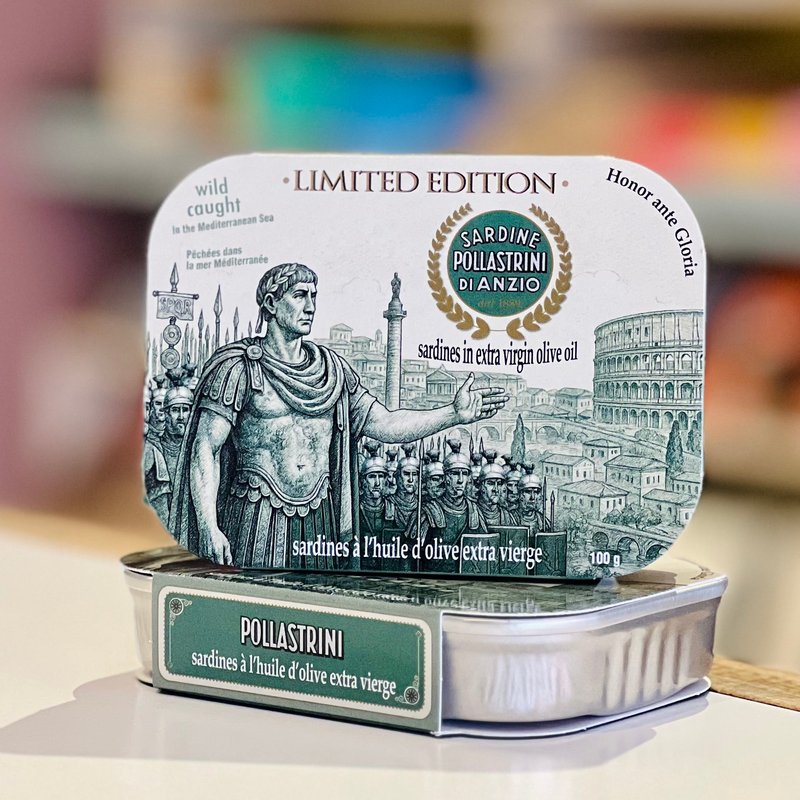
One to know · A vintage worth seeking out
Limited Edition Sardines in EVOOPollastrini · in stock at Good Cheese · checked today
Nobody ever planned for this. The fish did not know it was being aged. It aged anyway.
Not every vintage is intentional though. A company in Belgrade called River Fish spent years building a freshwater fish preservation process from scratch because no such technology existed in Europe. In 2016 they sealed a production run of lightly smoked rainbow trout from Lake Zaovine in Zlatibor, in sunflower oil, with just three ingredients. At the time, the Serbian market was too small, the cross-border regulations too complex, the financing needed to expand into the EU unavailable. River Fish closed and around six thousand cans went into storage. Nearly a decade later, opened and tasted, the trout had transformed. Miroslav Todorović, now the custodian of that remaining stock, is selling the surviving tins under the name Last Catch.
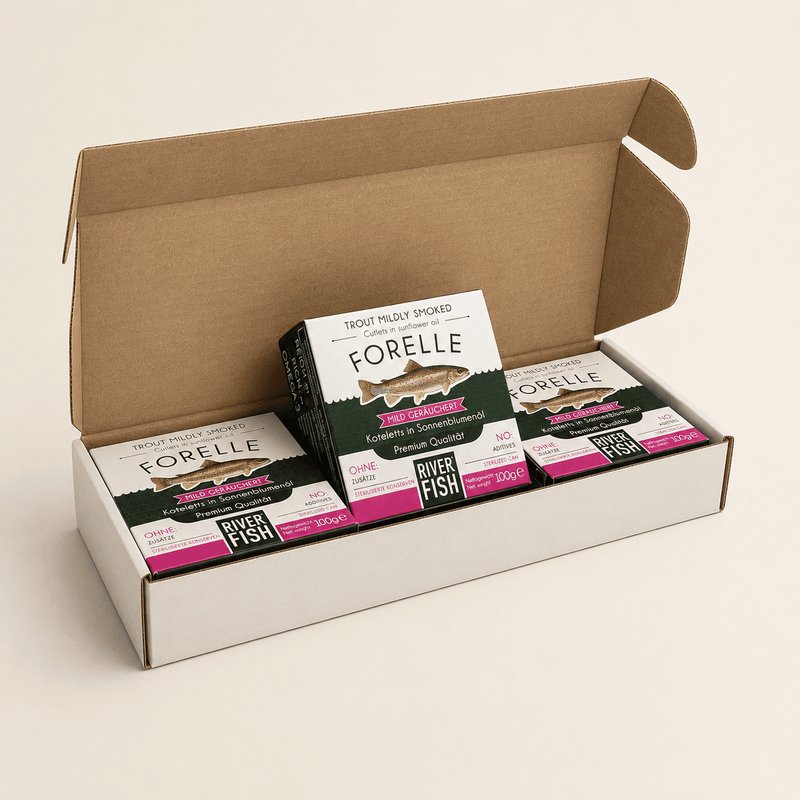
The reference tin · A different kind of aging · We may earn a commission
Last Catch 2016, 10-Year Aged Vintage Trout 3-PackRiver Fish · in stock at Last Catch · checked today
What the date actually means
A best-before date of three to five years is standard on most sardine tins. It is a general quality estimate, not a safety threshold. A bulging can, a leaking seal, visible rust through the metal, a smell that is clearly wrong on opening: those are the actual signals of a bad tin. A date that has passed is not one of them. Properly stored sardines in olive oil have been eaten decades past their stated date and found to be not only safe but beautifully transformed: firm and dense, the bones fully softened, the oil thick and mellow.